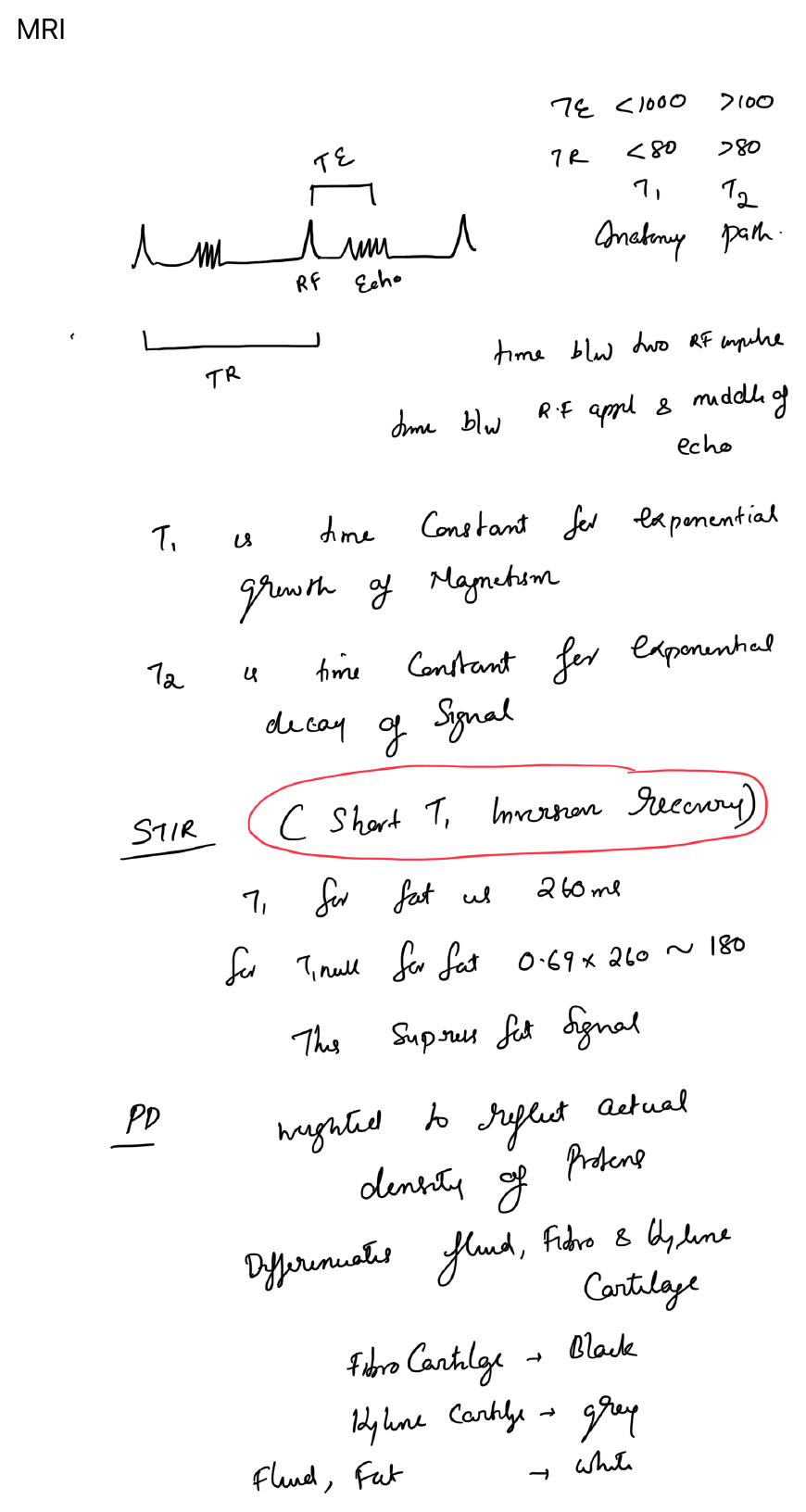
Basic concept
MRI uses a magnetic field and radiofrequency pulses to manipulate hydrogen nuclei and produce images with excellent soft-tissue contrast.
Common sequences
- T1: anatomy and marrow fat
- T2: fluid appears bright
- STIR / fat-suppressed images: highlight oedema and inflammation
- Proton density: useful in musculoskeletal imaging
Orthopaedic uses
- Meniscal and ligament injury
- Marrow oedema and occult fracture
- Infection and tumour staging
- Disc disease and neural compression
- Cartilage, tendon and muscle pathology
Advantages
- Excellent soft-tissue contrast
- No ionising radiation
- Multiplanar imaging
Limitations
- Cost and availability
- Motion artefact
- Contraindications with some implants or devices
Diagram