Piezoelectric effect
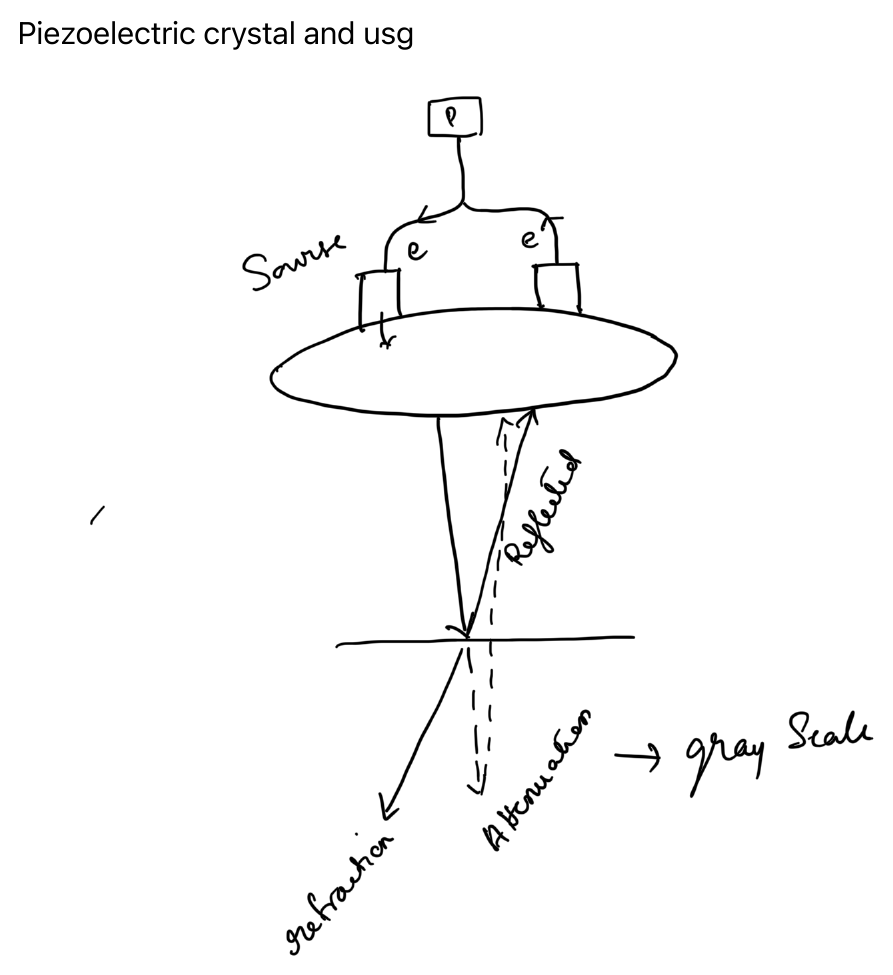
A piezoelectric crystal converts electrical energy into mechanical vibration and mechanical deformation back into an electrical signal.
This allows the same transducer to both generate ultrasound waves and receive returning echoes.
Ultrasound pulse generation
An alternating electrical current causes the crystal to expand and contract rapidly, producing high-frequency sound waves.
Echo reception
Reflected ultrasound waves deform the crystal and generate electrical signals. The ultrasound machine uses echo timing and amplitude to construct an image.
Important principles
- frequency determines wavelength and influences penetration and resolution
- higher frequency gives better resolution but less tissue penetration
- acoustic impedance differences determine reflection at tissue interfaces
- gel removes the air interface between probe and skin
Doppler principle
Doppler ultrasound detects change in frequency caused by motion, allowing assessment of blood flow.
Orthopaedic applications
- tendon and muscle assessment
- effusions
- dynamic impingement
- guided injections
- developmental dysplasia screening in infants
Diagram