Parts of a screw
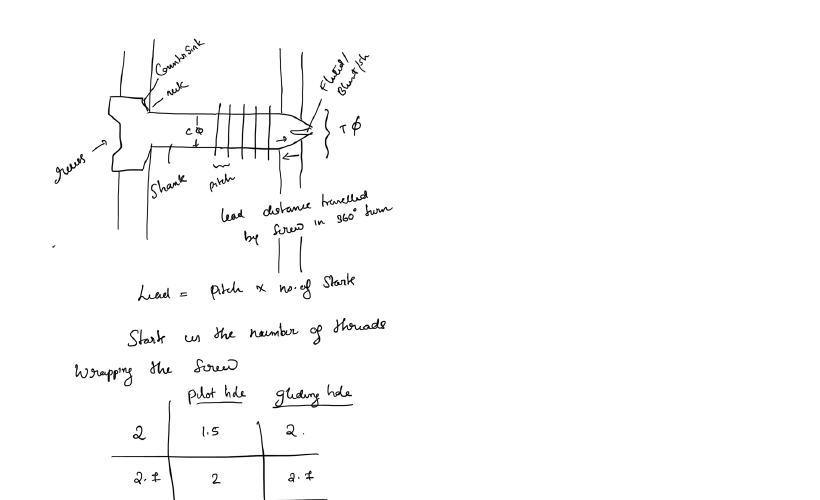
A screw may consist of:
- Head
- Shaft
- Core
- Threads
- Tip
- Drive recess
The pitch is the distance between adjacent threads. The lead is the distance advanced with one complete turn; in a single-start thread it equals the pitch.
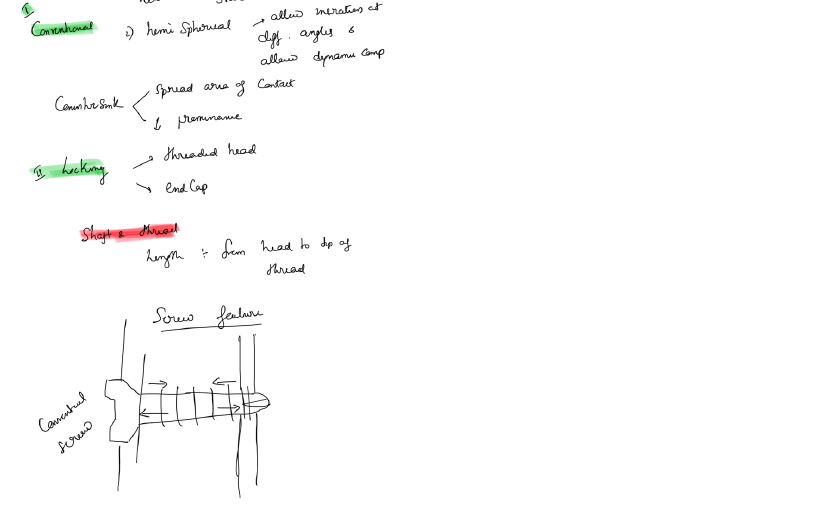
Cortical screw
- Fine thread
- Relatively small pitch
- Designed for dense cortical bone
Cancellous screw
- Deeper thread
- Larger pitch
- Designed for cancellous metaphyseal bone
Partially threaded cancellous screws may be used as lag screws when the threads engage only the far fragment.
Lag screw principle
A lag screw produces interfragmentary compression by allowing the near fragment to glide while the threads purchase the far fragment.
This can be achieved by:
- a partially threaded screw with threads beyond the fracture, or
- a fully threaded screw inserted using a gliding hole in the near cortex
The fracture should be reduced before final tightening.
Locking screw
A locking screw threads into the plate hole to create a fixed-angle construct. Stability depends on the plate–screw construct rather than compression of the plate onto bone.
Position screw
A position screw maintains the relationship between fragments without deliberately generating interfragmentary compression.
Cannulated screw
Cannulated screws are inserted over a guidewire and are useful when accurate placement is important.
Headless compression screw
Provides compression while the head remains buried below the articular or cortical surface. Commonly used in small-bone and periarticular fixation.
Screw insertion principles
- Use correct drill diameter and tap where required
- Measure length accurately
- Avoid penetration into joints or vulnerable soft tissues
- Countersink when indicated
- Tighten sufficiently for fixation but avoid stripping the thread
References
- Orthobullets. Orthopaedic Implants.
- Orthobullets. Principles of Fracture Fixation.