Sources
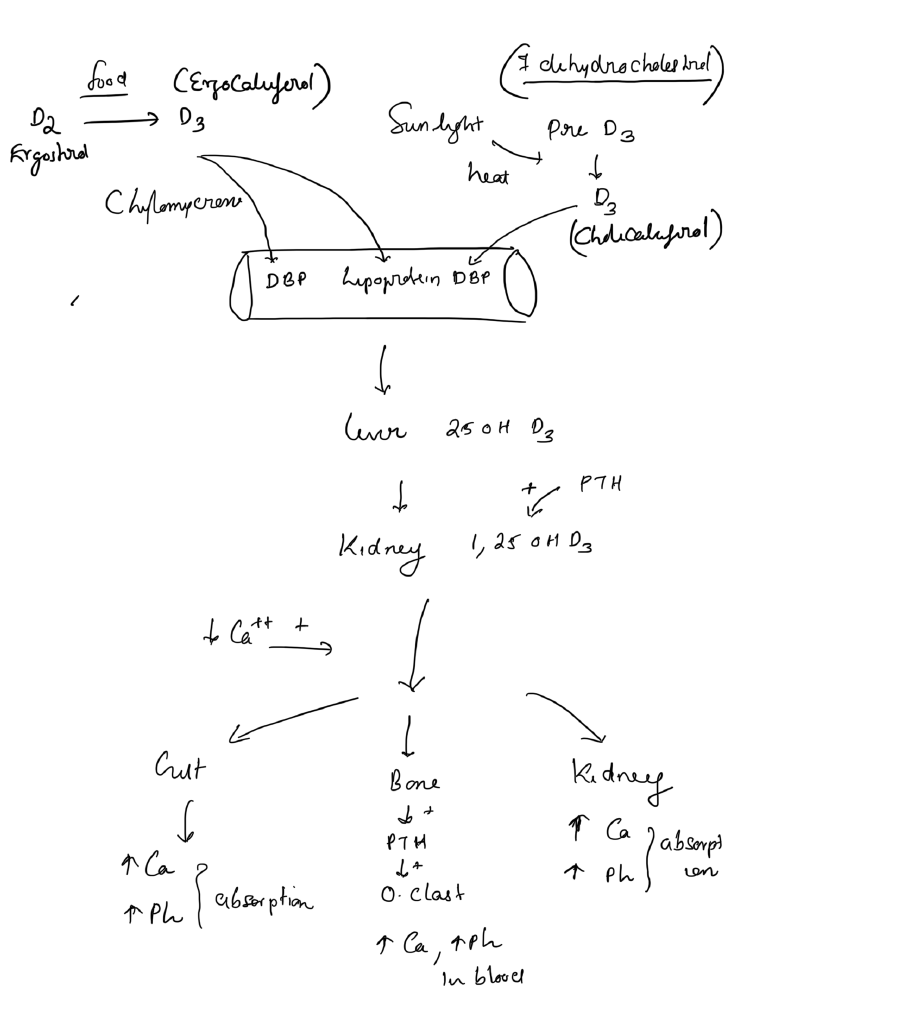
Vitamin D is obtained from:
- Vitamin D3 (cholecalciferol) formed in skin from 7-dehydrocholesterol under ultraviolet B light
- Dietary vitamin D3
- Vitamin D2 (ergocalciferol) from plant or fungal sources
Vitamin D circulates bound mainly to vitamin D–binding protein.
Liver
Vitamin D is hydroxylated in the liver to 25-hydroxyvitamin D [25(OH)D, calcidiol].
This is the principal circulating storage form and the standard laboratory measurement used to assess vitamin D status.
Kidney
25(OH)D is converted by renal 1-alpha-hydroxylase to 1,25-dihydroxyvitamin D [1,25(OH)2D, calcitriol], the active hormone.
Regulation
1-alpha-hydroxylase is stimulated by:
- Parathyroid hormone
- Low calcium indirectly through PTH
- Low phosphate
It is inhibited by:
- FGF23
- High phosphate
- High calcitriol through feedback mechanisms
Actions of calcitriol
Intestine
- Increases calcium absorption
- Increases phosphate absorption
Bone
Works with PTH and the RANK/RANKL system to regulate bone turnover and mineral homeostasis.
Kidney
Promotes conservation of calcium and contributes to phosphate regulation.
Deficiency
Vitamin D deficiency causes impaired mineralisation:
- Rickets in children
- Osteomalacia in adults
Typical biochemical changes may include low or low-normal calcium, low phosphate, raised alkaline phosphatase and secondary hyperparathyroidism, depending on severity and stage.
References
- Orthobullets. Vitamin D and Calcium Metabolism.