Osteoclast formation
Osteoclasts arise from the monocyte-macrophage lineage. Their differentiation and activity are controlled predominantly through the RANK-RANKL-OPG pathway.
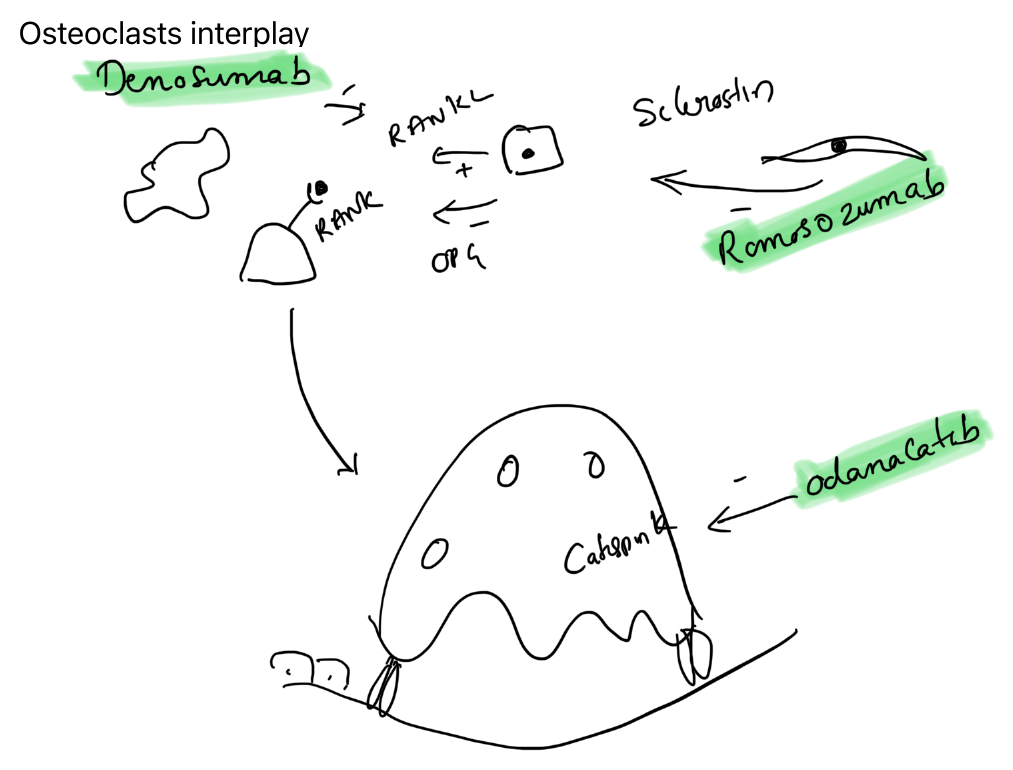
RANK-RANKL
- RANK is expressed on osteoclast precursors.
- RANKL is produced primarily by osteoblast-lineage cells and osteocytes.
- Binding of RANKL to RANK promotes osteoclast differentiation, activation and survival.
Osteoprotegerin
Osteoprotegerin (OPG) is a decoy receptor for RANKL. It reduces osteoclast formation by preventing RANKL from binding to RANK.
Sclerostin
Sclerostin is produced mainly by osteocytes and inhibits Wnt signalling, thereby reducing osteoblast activity and bone formation.
Pharmacological targets
Denosumab
Denosumab is a monoclonal antibody against RANKL. It reduces osteoclast formation and bone resorption.
Romosozumab
Romosozumab is an antibody against sclerostin. It increases bone formation and also decreases bone resorption.
Cathepsin K inhibition
Cathepsin K is an osteoclast enzyme involved in degradation of bone matrix. Cathepsin K inhibitors were developed as antiresorptive agents; odanacatib was investigated but is not in clinical use.
Clinical relevance
The balance between osteoblast and osteoclast activity is central to osteoporosis, metabolic bone disease, fracture healing and pharmacological treatment of low bone mass.