Clinical image
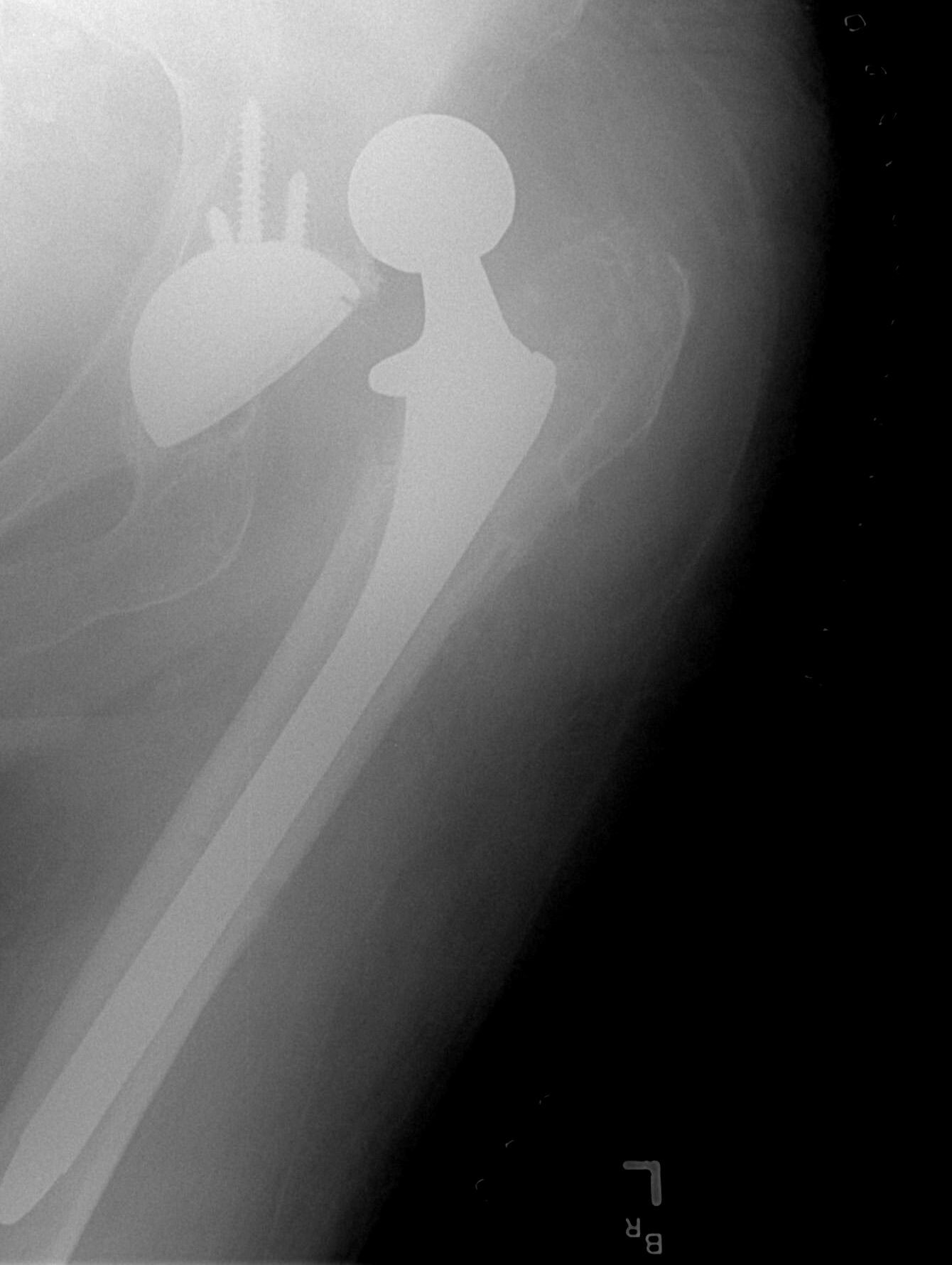
Dislocated total hip replacement. Source: Wikimedia Commons — Bill Rhodes; CC BY 2.0. Image binary is embedded locally in this package; original source and licence are retained.

Key points
Implant factors
Principle
- I will take a history and examine the patient
- Give adequate analgesia if painful
History
- Time since
- No of dislocations
- Mechanism
- Co morbidities
Exam
- NV status
- Position of limb
- Mental state
Investigation
- Previous X-rays
- Current lateral X-ray
Management
- Reduce
- Search the causes
- Patient Factors
- Surgical Factors
- Implant factors
Patient factors
- Female
- Neurological conditions
- Poor anatomy
- Trauma
- revision
- Infection
- Compliance
Surgical Factors
- Surgeon experience
- (<30/year, 3 times dislocation)
- Battaglia et al showed improvement with volume
- Component positioning
- Cup abduction angle: 40 degree
- Cup Antiversion: 20-30
- Stem: 15-20
- CT if doubtful
- Impingement
- Osteophyte
- Cement
- Soft tissue tensioning: Offset
Offset
- Acetabular
- Over medialisation of acetabulum
- Femoral
- Perpep distance b/w head centre and shaft centre
- Increased offset
- Decreased JRF required
- Increased femoral stem stress
Implant factor
- Wear
- Head size: large
- increase the jump distance or excursion
- Head neck ratio: large is better
- increase arc of ROM prior to impingement
Reconstruction ladder
Implant factor
- Liner replacement
- PLAD posterior lip augmentation device
- Constrained liner
- Dual mobility cup