Anatomy
The brachial plexus is formed by the ventral rami of C5–T1 and is organised into roots, trunks, divisions, cords and terminal branches.
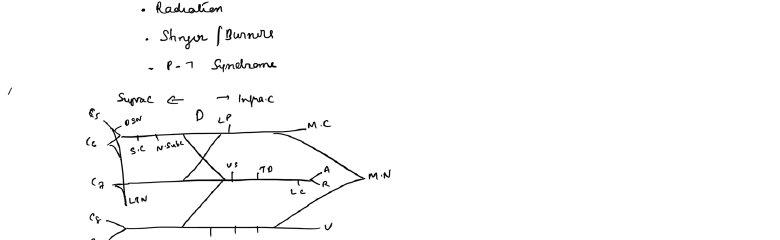
Mechanism
Adult traumatic injuries most commonly follow high-energy traction, particularly motorcycle trauma. Other causes include penetrating injury, fracture-dislocation and iatrogenic injury.
Level of injury
Upper plexus injury
Predominantly C5–C6.
Weakness may involve:
- Shoulder abduction and external rotation
- Elbow flexion
Lower plexus injury
Predominantly C8–T1.
Weakness mainly affects intrinsic hand function and may be associated with Horner syndrome when T1 sympathetic fibres are involved.
Preganglionic versus postganglionic injury
Preganglionic root avulsion
- Lesion proximal to dorsal root ganglion
- May be associated with Horner syndrome
- Sensory nerve action potentials may remain present despite sensory loss
- Not amenable to direct nerve grafting from the avulsed root
Postganglionic rupture
- Lesion distal to dorsal root ganglion
- May be suitable for grafting if viable proximal and distal nerve are available
Assessment
Document:
- Shoulder abduction and external rotation
- Elbow flexion and extension
- Wrist and finger flexion/extension
- Intrinsic hand function
- Sensory territories
- Scapular winging
- Horner syndrome
Investigations
- Plain radiographs for associated fractures
- MRI or CT myelography for root-level injury in selected cases
- EMG and nerve-conduction studies to define injury and follow recovery
Treatment principles
- Open injuries and associated vascular injuries may require urgent exploration.
- Closed injuries are observed initially for recovery while the lesion is defined.
- Persistent severe deficits may require nerve grafting, nerve transfer or later tendon/muscle transfer.
- For reconstructive nerve surgery, delay reduces the chance of useful motor recovery; definitive planning is usually undertaken within the first several months.
Priorities of reconstruction
Typical priorities are:
- Elbow flexion
- Shoulder stability and abduction/external rotation
- Hand function when reconstructable
References
- Orthobullets. Brachial Plexus Injuries.
- Orthobullets. Brachial Plexus Anatomy.