Why prediction matters
Growth prediction is important when planning treatment for limb-length discrepancy, angular deformity and timing of guided growth or epiphysiodesis.
Estimating adult height
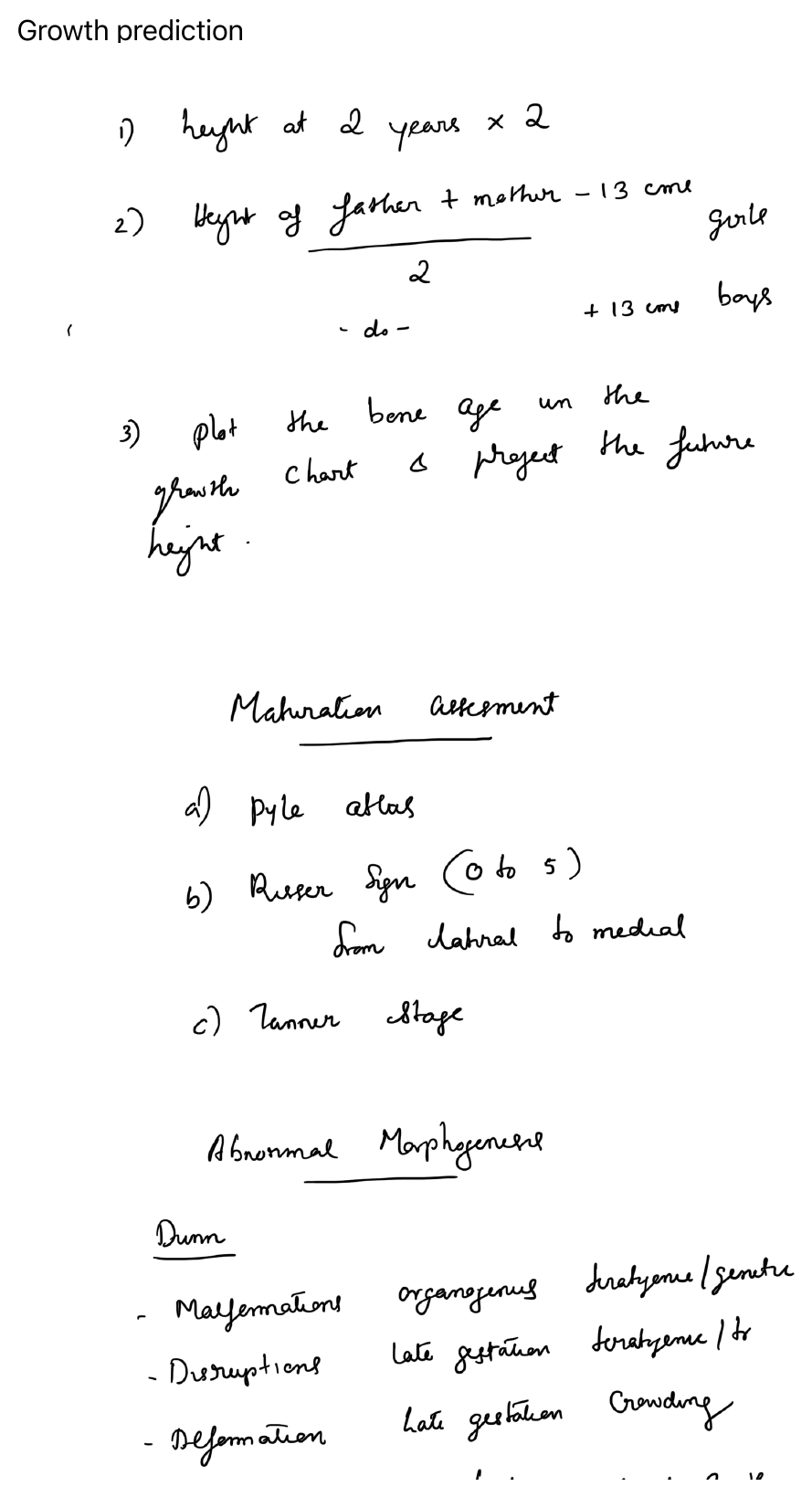
Simple clinical estimates include:
- doubling height at approximately 2 years as a rough approximation
- mid-parental height calculations
For greater accuracy, height can be plotted against age and skeletal maturity using validated growth charts and prediction methods.
Skeletal maturity assessment
Common approaches include:
- hand and wrist bone age atlases
- elbow-based skeletal maturity systems in younger children
- Tanner–Whitehouse methods
- assessment of puberty and growth velocity
Limb-length prediction methods
Green–Anderson charts
Estimate remaining growth at the distal femur and proximal tibia according to skeletal age.
Moseley straight-line graph
Uses serial measurements to predict discrepancy at maturity and timing of epiphysiodesis.
Multiplier method
Uses age-dependent multipliers to estimate final limb length and discrepancy.
Practical principles
Prediction is more reliable when based on:
- repeated measurements
- skeletal rather than chronological age when maturation is abnormal
- clear knowledge of the cause of discrepancy
- assessment of growth trend rather than a single measurement
Diagram