Principle
A volar locking compression plate provides fixed-angle support to the distal radius. Locking screws create a stable plate-screw construct and can support subchondral fragments in osteoporotic or comminuted fractures.
Indications
Volar locking plate fixation is commonly used for unstable distal radius fractures when acceptable alignment cannot be maintained by closed treatment.
Plate position
The plate is placed on the volar surface of the distal radius. Its distal edge should respect the watershed line to reduce flexor tendon irritation.
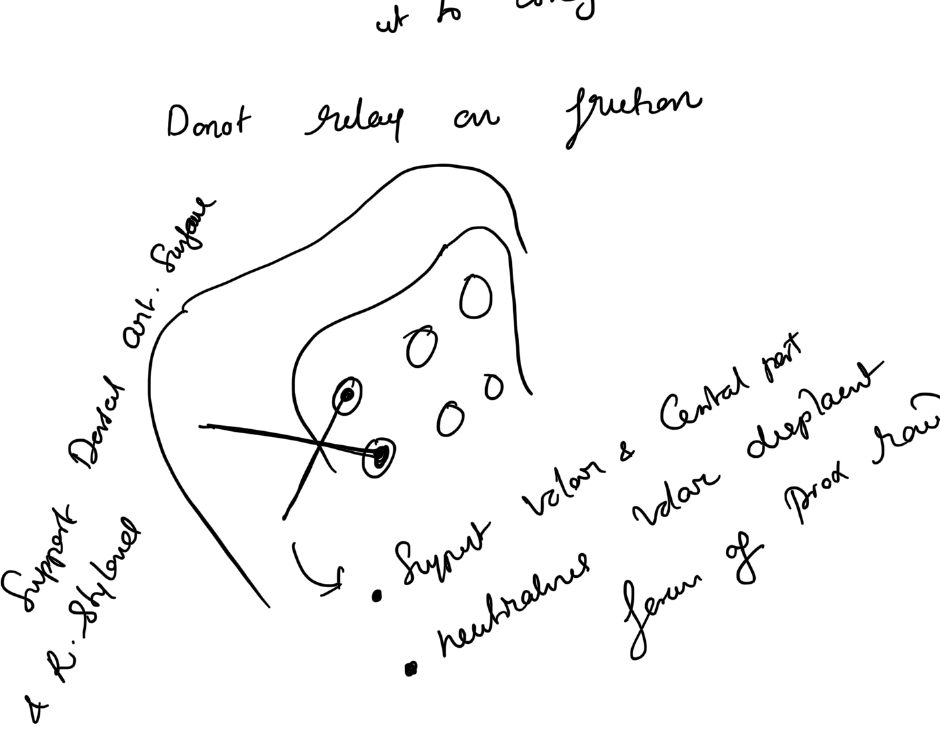
Distal screw placement
Important principles include:
- support the subchondral bone beneath the articular surface
- capture key fragments including the volar ulnar corner when necessary
- avoid screws penetrating the radiocarpal joint
- avoid dorsal screw prominence, which can injure extensor tendons
Reduction goals
Restore:
- radial height
- radial inclination
- volar tilt
- articular congruity
- DRUJ alignment
Complications
- flexor tendon irritation or rupture, particularly FPL if the plate is too distal or prominent
- extensor tendon irritation from dorsal screw penetration
- median nerve symptoms
- loss of reduction
- intra-articular screw penetration
- infection
- stiffness
Postoperative imaging
Use appropriate fluoroscopic views to confirm articular reduction and exclude dorsal or intra-articular screw penetration.