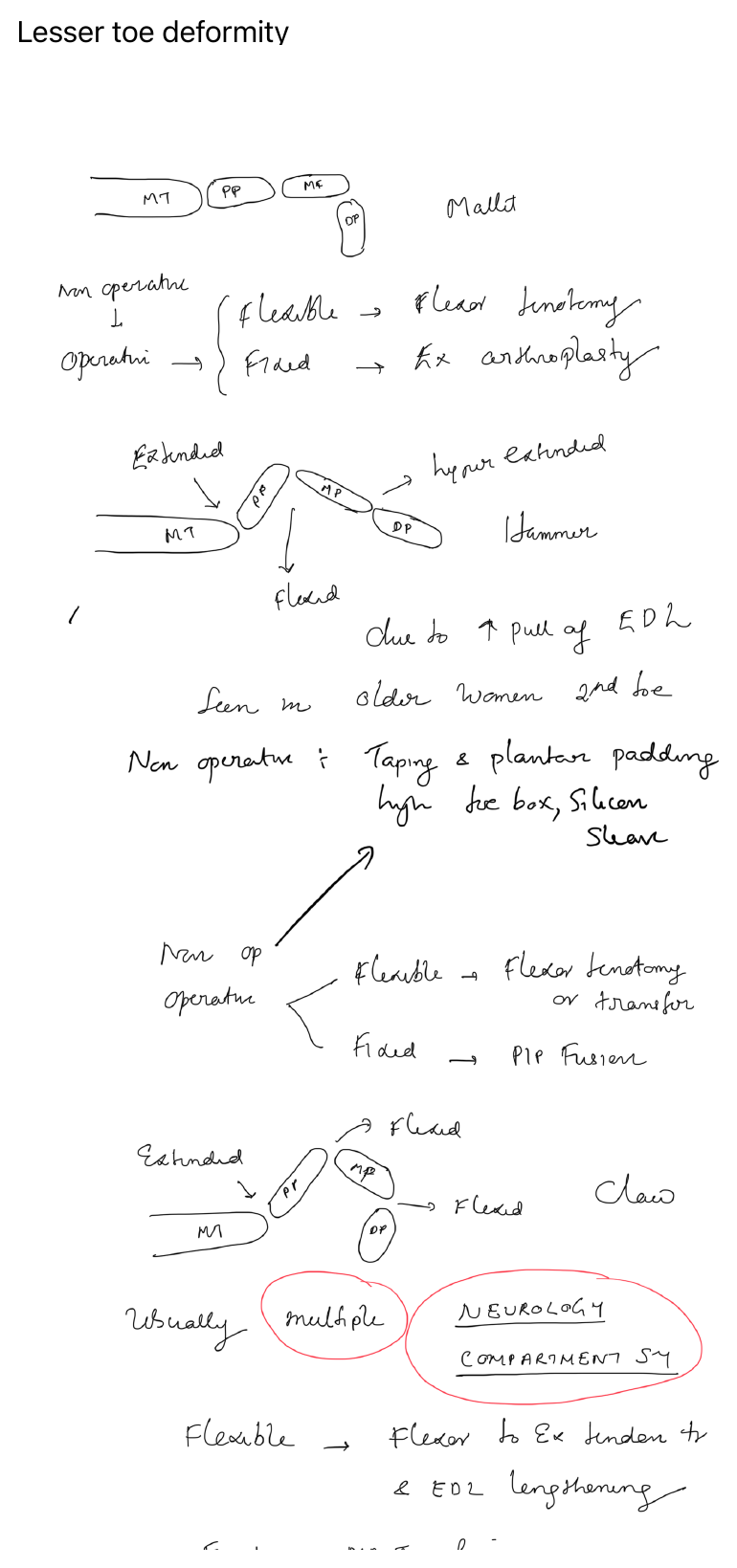
Types
Claw toe
- MTP hyperextension
- PIP flexion
- DIP flexion
Clawing affecting several toes should raise suspicion of a neuromuscular disorder.
Hammer toe
- MTP neutral or slightly extended
- PIP flexion
- DIP usually extended or neutral
Mallet toe
- Isolated DIP flexion
- PIP and MTP remain relatively neutral
Examination
Determine whether the deformity is flexible or fixed. Assess:
- MTP stability
- plantar plate tenderness
- callosities and pressure lesions
- hallux valgus and forefoot crowding
- ankle equinus
- neurological abnormalities when multiple toes are involved
A flexible deformity may correct with manipulation or with ankle plantarflexion; a rigid deformity does not.
Non-operative treatment
- wide toe-box footwear
- pressure-relieving pads or sleeves
- callus care
- orthoses where appropriate
- stretching for flexible deformity
Operative principles
Surgery is reserved for persistent painful, progressive or fixed deformity. Procedures are chosen according to the level and flexibility of deformity and may include tendon release or transfer, PIP resection or fusion, and MTP stabilisation.
Diagram