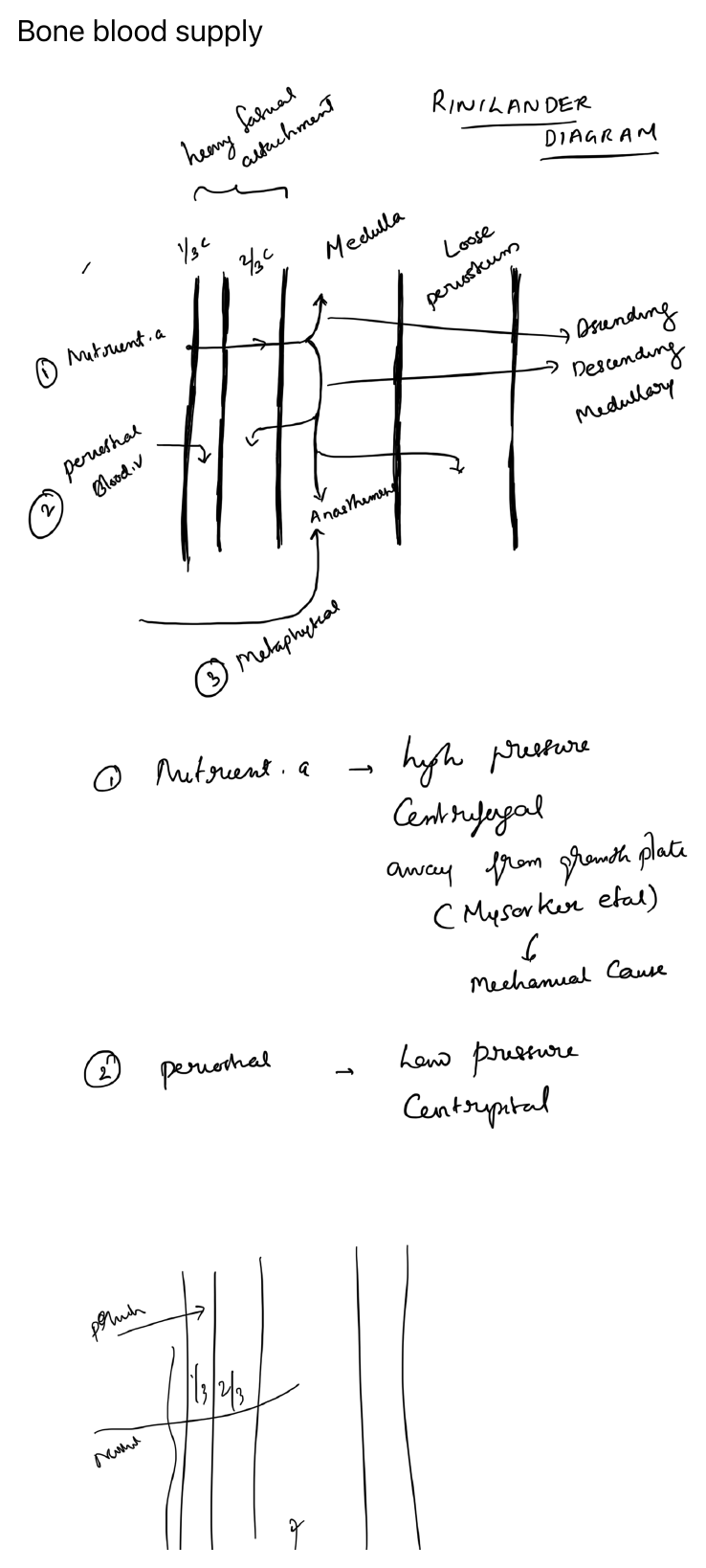
Components of blood supply
Bone receives blood from four main sources:
- Nutrient artery
- Periosteal vessels
- Metaphyseal vessels
- Epiphyseal vessels
Nutrient artery
- Enters the diaphysis through the nutrient foramen
- Divides into ascending and descending medullary branches
- Supplies the marrow, endosteum and inner portion of cortex
- Has an important role in diaphyseal blood supply
Periosteal blood supply
- Derived from vessels in the surrounding soft tissues and muscles
- Supplies the outer cortex
- Particularly important after fracture and during healing
- Easily compromised by periosteal stripping
Metaphyseal and epiphyseal supply
- Rich metaphyseal circulation is derived from the periarticular vascular network
- Epiphyseal vessels supply the epiphysis
- In children, the physis separates metaphyseal and epiphyseal circulations to varying degrees depending on age and site
Direction of cortical perfusion
- Nutrient artery flow is generally centrifugal, from the medulla toward the cortex
- Periosteal blood flow is centripetal, from outside inward
Clinical relevance
- Periosteal stripping jeopardises cortical perfusion and fracture healing
- Some bones depend heavily on a limited vascular supply and are prone to avascular necrosis
- Internal fixation techniques should preserve both endosteal and periosteal blood supply where possible
- Children have different vascular patterns because of the physis
Fracture healing relevance
Following injury, the blood supply is altered. Revascularisation from surrounding soft tissues and periosteum is especially important in secondary bone healing.
Diagram