Common organisms
Gram-positive cocci
- Staphylococcus aureus — commonest cause of acute osteomyelitis and septic arthritis
- Coagulase-negative staphylococci — important in implant-related infection
- Streptococci
Gram-negative organisms
- Seen in open injuries, immunocompromise and healthcare-associated infection
- Pseudomonas is important in puncture wounds through footwear and hospital settings
Special organisms
- Salmonella in sickle cell disease
- Kingella kingae in young children
- Mycobacterium tuberculosis in chronic infection
- Anaerobes in chronic or polymicrobial wounds
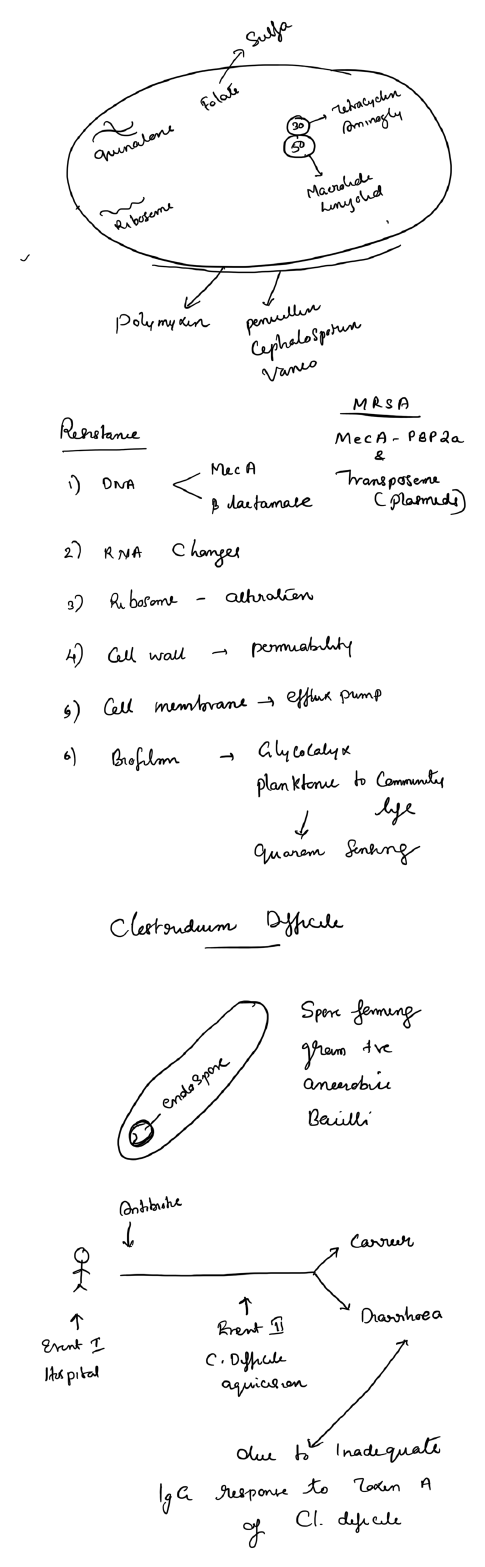
Biofilm
Implant-related infection is difficult because organisms form biofilm, reducing antibiotic penetration and host clearance.
Principles of management
- Obtain cultures before antibiotics if possible
- Debride devitalised tissue
- Drain pus collections
- Use targeted antibiotics with microbiology input
Diagram