Blueprinting
TL;DR
Why blueprinting?
Curriculum is the path NMC want the students to take to make them competent.
We assess the student to find out whether she has learned the subject.
Student learn during the course of the MBBS program to pass the exam.
For an average student, assessment becomes the curriculum — she focuses primarily on how to pass the exam. As the saying goes,“assessment is the tail that wags the curriculum dog.”
The teacher, however, wants her to learn the subject itself. This creates a significant misalignment between teaching, learning, and assessment.
The complaints from students

The great misalignment
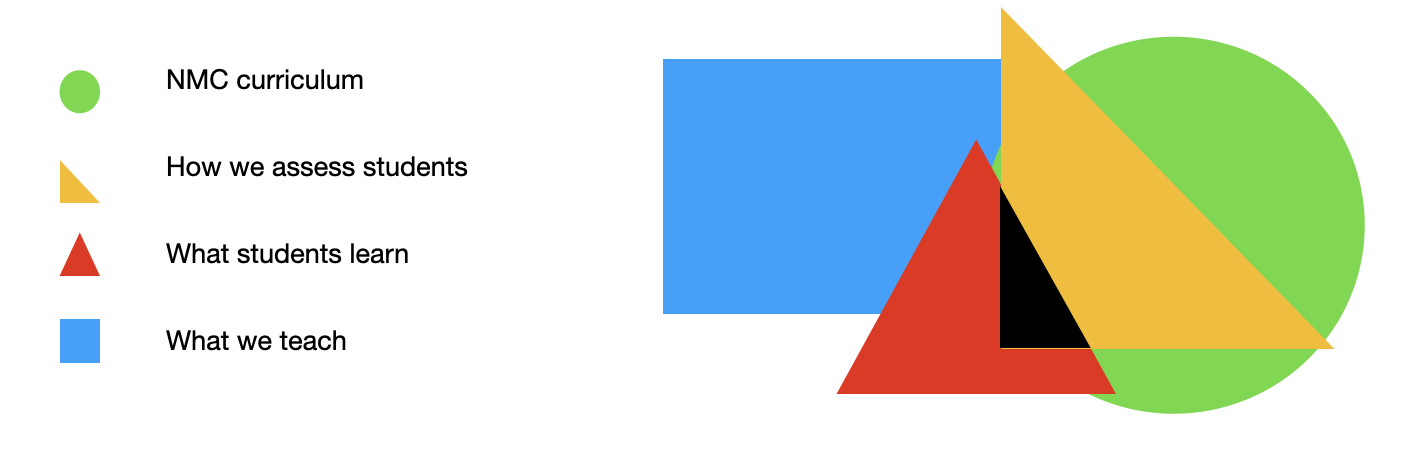
How to align?
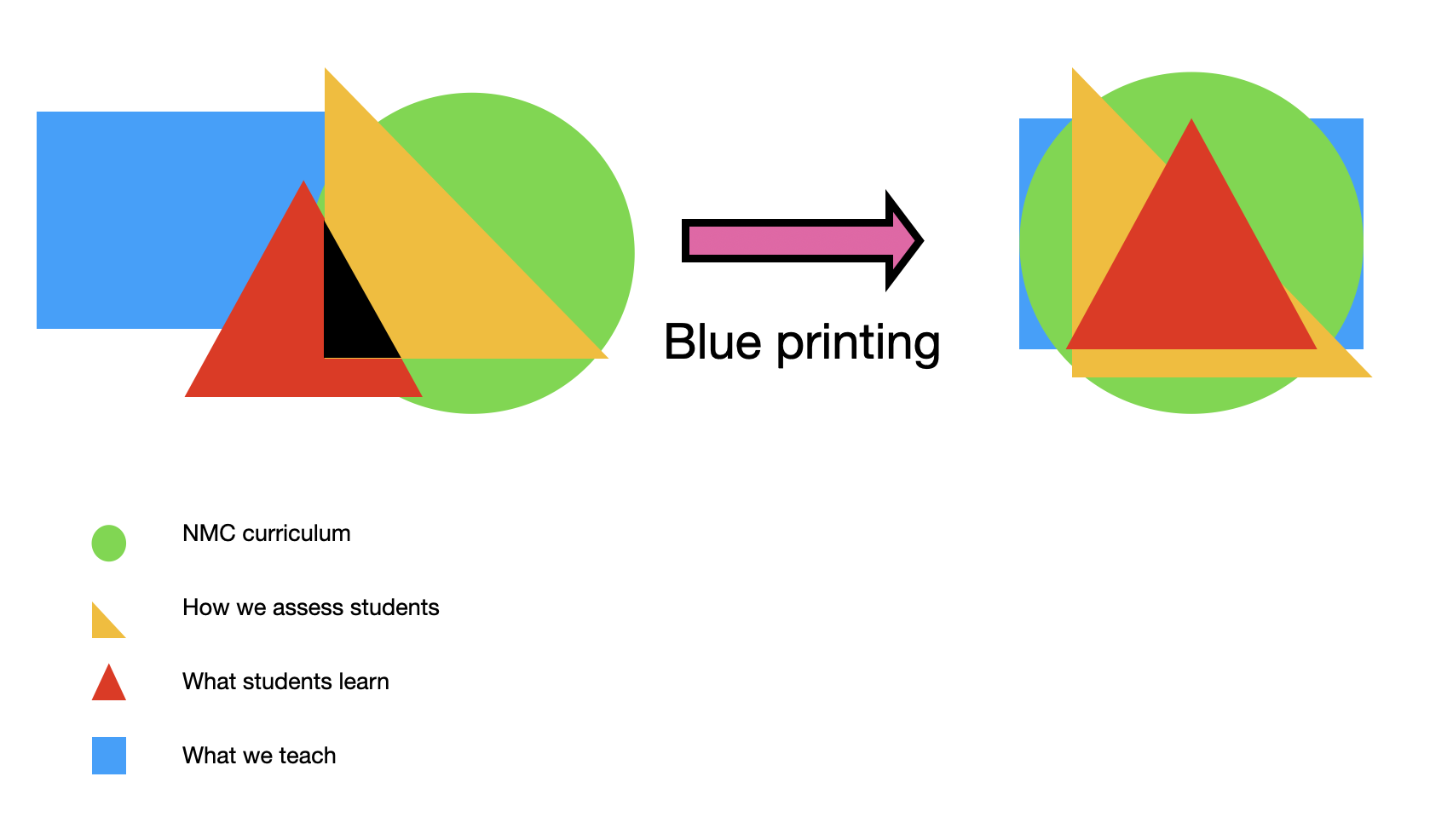
Define blue printing
Demonstrate blueprinting using a spreadsheet
Definition
Blueprint is a and a specification for an assessment program which ensures that all aspects of the curriculum and educational domains are covered by assessment programs over a specified period of time.
In general, the aim of the blueprinting is to reduce the two major threats to validity: construct under-representation (CU), and construct irrelevance variance (CIV).
Construct under-representation (CU)
CU refers to under sampling or biased sampling of the content domain or the course contents. There may be too few items to sample domain adequately.
Construct irrelevance variance (CIV)
CIV is a systematic error introduced into assessment data by the unrelated variables. This means inclusion of flawed item formats, too easy or too difficult questions or examiner bias. For example, tendency to test favorite, or hot or trivial topics.
Attributes of assessment
Validity
Reliability
Accountability
Flexibility
Comprehensiveness
Timeliness
Relevance
How to blueprint an assessment?
Below is a sample blueprint of 6 competencies of MBBS curriculum. First column is the list of topics with the competency number. That is followed by:
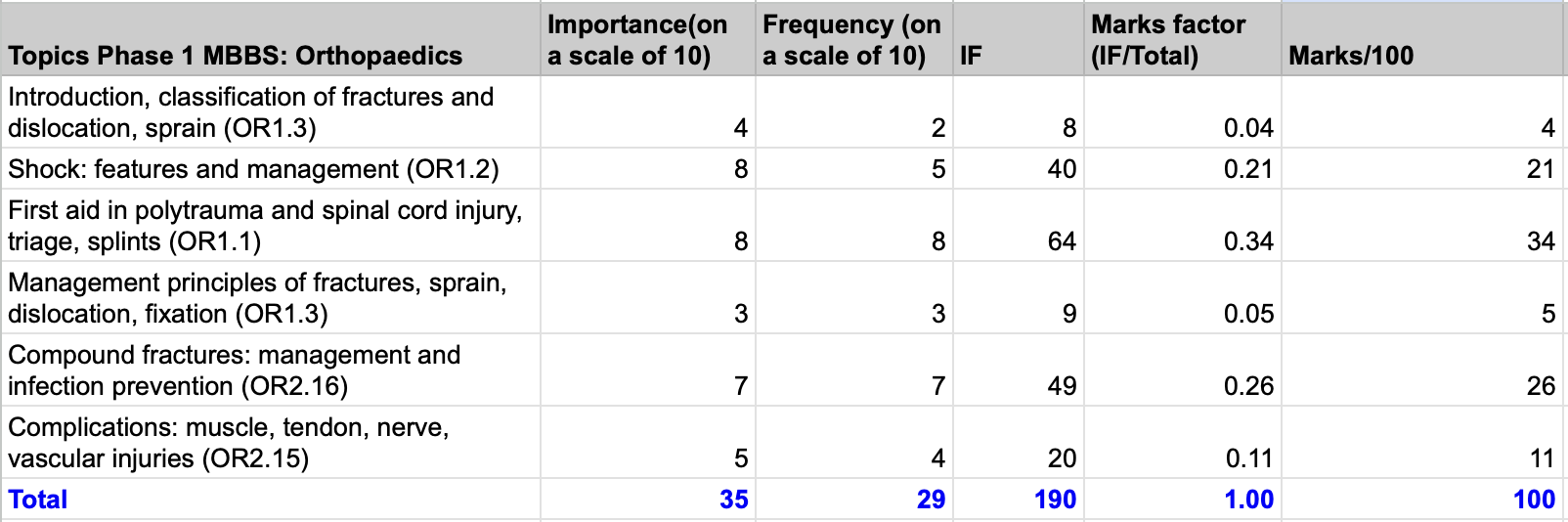
Importance and Frequency
They are the most crucial variable in the blueprint. We define them subjectively on a predefined scale (say, of 10). It could be compared to VAS for pain. Ideally all faculty in the department should sit together and decide on the values to be entered.
Importance and Frequency in each raw is multiplied to get IF.
e.g.: For the first topic, Importance is 4 and frequency is 2. So the I F is 8. For the entire subject, we get the total I F by adding all the values together in that column. Here it is 190.
Marks Factor
The whole exercise is to get the marks factor for each topic. \(I F / Total I F\) is the simple formula to get marks factor. In our e.g., for the first topic,
Marks factor is \(8/190=0.0421\).
We round that figure to 2 decimal places, i.e., 0.04.
Deciding the marks for the question
Assume that we are going to conduct an exam for 100 marks. \(Marks Factor X 100\) gives the marks we are supposed to assign for each topic.
In our example, it is \(0.04 X 100 = 4\). So the first topic should be assigned 4 marks in the question paper.
Assigning difficulty level
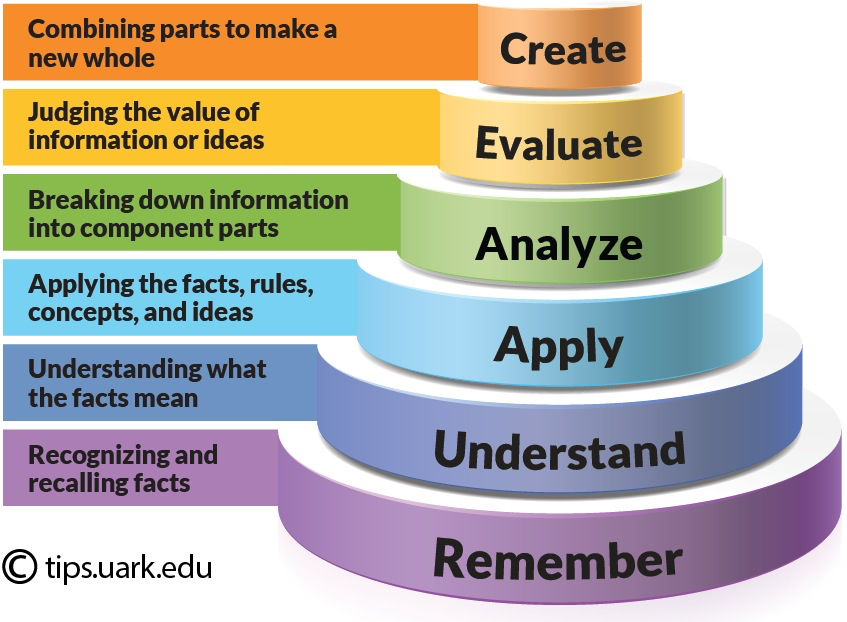
Now that we have decided on the marks, each question can be sub divided based on Blooms taxonomy (from remembering to creating). In our example we have used only first 3 levels of learning.
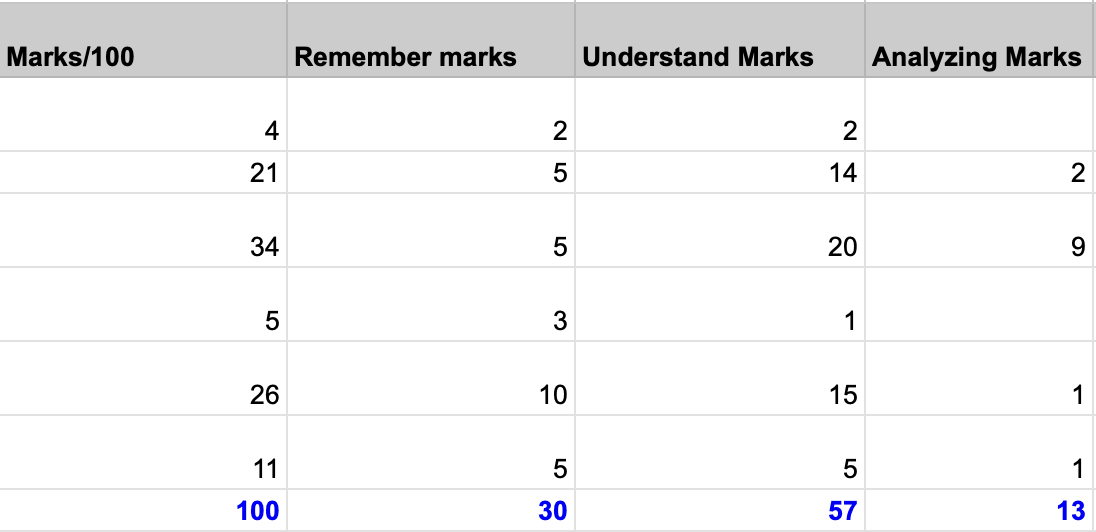
Do it yourself
NMC has published the UG curriculum. Go to the NMC website, select the appropriate volume and select top 5 competencies from your subject.
Open a spreadsheet
See this google sheet with sample blueprint and create one blueprint for the selected competencies.
Self assessment
Blueprinting
It is a map that allign curriculum with assessment
- Curriculum not syllabus
- Curriculum is the defined path for the student
- Wrong
- Wrong
In blueprinting, the table of specifications primarily links
Assessment, assessment assessment, assessment is the curiiculum and that should align with SLO
Which of the following is a key step in creating a blueprint?
Key step is to identify the importance and frequency
Blueprinting helps ensure that assessments are
Check for the attributes of assessment
Blueprinting aims to reduce
Reduce biased sampling of the content domain or the course contents and tendency to test favorite, or hot or trivial topics.